“The fault lines in our world are widening. Cracks have become canyons.” These words from UN Secretary-General António Guterres at last week’s General Assembly feel particularly relevant as we look at the events unfolding around the world. From conflict and critical minerals to extreme weather, shifting global alliances and forgotten humanitarian crises, the headlines may seem disconnected at first. Yet, scratch beneath the surface and the connections quickly become clear. One event can trigger another, and a crisis thousands of kilometres away can have consequences much closer to home.
In the Middle East, tensions continue to spread beyond the original battle lines. Violence has intensified in Yemen, with Houthi forces advancing along the Red Sea coast and renewed attacks affecting Saudi Arabia. The UN is trying to prevent further escalation, but the stakes go well beyond the region. The Bab el-Mandeb is one of the world’s key maritime chokepoints, meaning instability there can quickly become a problem for global shipping and trade.
Meanwhile, another quieter global contest is gathering pace: the race for critical minerals. Rare earths, copper, lithium and other resources are increasingly central to technology, renewable energy, defence and AI. China remains dominant in rare-earth processing, while the US, Europe and others are looking for alternative supplies across Africa, Central Asia and Latin America. What lies beneath the ground is increasingly becoming a matter of geopolitical power.
Nature, meanwhile, is delivering its own reminders of vulnerability. Severe flooding has hit India, Nepal and Thailand this week, with dozens of deaths and hundreds of thousands of homes affected. In India alone, at least 56 people were killed, while Thailand reported impacts across 41 provinces. Mexico has also been dealing with Hurricane Polo.
US–China relations remain another major piece of the puzzle. President Donald Trump and President Xi Jinping met in Washington last week, with trade, technology and Taiwan among the issues shaping the relationship. Even when tensions ease temporarily, the underlying competition continues to influence global markets, supply chains and security.
And then there are the crises that can easily disappear from the headlines. Haiti and the Democratic Republic of Congo were both on the UN Security Council agenda this week, while Sudan continues to face devastating conflict and displacement. More than 400 Sudanese refugees are now crossing into Chad every day, according to UNHCR — a reminder that behind geopolitical headlines are millions of people simply trying to find somewhere safe.
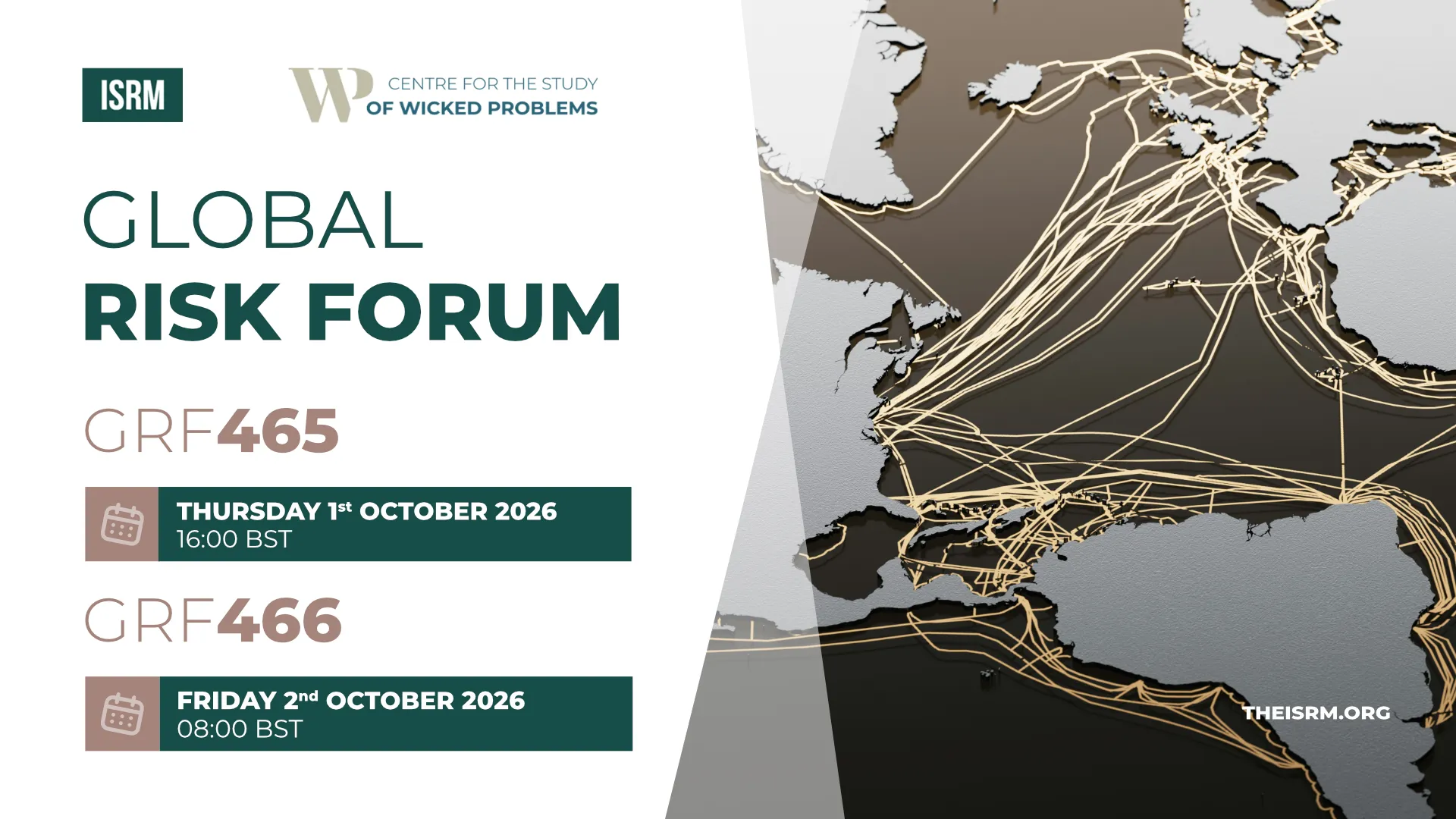
Join the Global Risk Forum conversation this week as we look beyond the individual headlines, explore the connections between them, and consider what they may mean for the world around us. What are you seeing, and which developments do you think we should be paying closer attention to?
- Global Risk Forum 465
- Thursday, 1st October at 16:00 BST
- REGISTRATION >>
- Global Risk Forum 466
- Friday, 2nd October at 08:00 BST
- REGISTRATION >>
