Shakespeare put it well: “When sorrows come, they come not single spies, but in battalions.” Four centuries later, the observation still holds – and this week in New York, it’s less a literary flourish than a literal agenda.
The 81st UN General Assembly is bringing many of these pressures together, with 73 heads of state and 45 heads of government in town for a high-level week (22nd – 28th September) against wars in the Middle East and Ukraine, humanitarian crises, climate pressures and growing doubts about the effectiveness of international institutions. That doubt isn’t abstract – it coincides with the selection of the UN’s next Secretary-General and a reform push (UN80), both unfolding while Security Council vetoes are widely blamed for paralysing action on the very wars dominating the debate floor.
The Iran conflict remains central. In his 22nd September address, Trump defended the US campaign against Iran, framing a stark choice: a deal that lets Iran “rebuild,” or he’ll “annihilate the Islamic Republic” and “drive them into hell.” He suggested a deal is unlikely before the midterms but could come soon after, and confirmed Jared Kushner and envoy Steve Witkoff had already met Iranian officials on the sidelines. Diplomacy continues alongside real escalation risk – “de-escalation” and “annihilation” floated by the same man, in the same speech.
The fallout is spreading. In Yemen, the Houthis have made major advances along the Red Sea coast, including the capture of Mocha and several strategically important islands while pushing toward Aden. The fighting has already displaced more than 130,000 people this month. Saudi-led airstrikes have continued, but the Houthi advance has not been halted. Beyond Yemen, the nearby Bab el-Mandeb Strait is a vital shipping chokepoint. The Houthi gains also strengthen Iran’s regional position and give Iran-aligned forces greater leverage around one of the world’s key maritime routes – potentially complicating future diplomacy.
Meanwhile, a slower risk is getting far less attention. El Niño is strengthening – the WMO (World Meteorological Organisation) puts the odds of it persisting through February 2027 at nearly 100%, one of its strongest forecasts yet. Extreme heat, drought and flooding could follow, compounding conflict zones, high food prices and shrinking aid budgets.
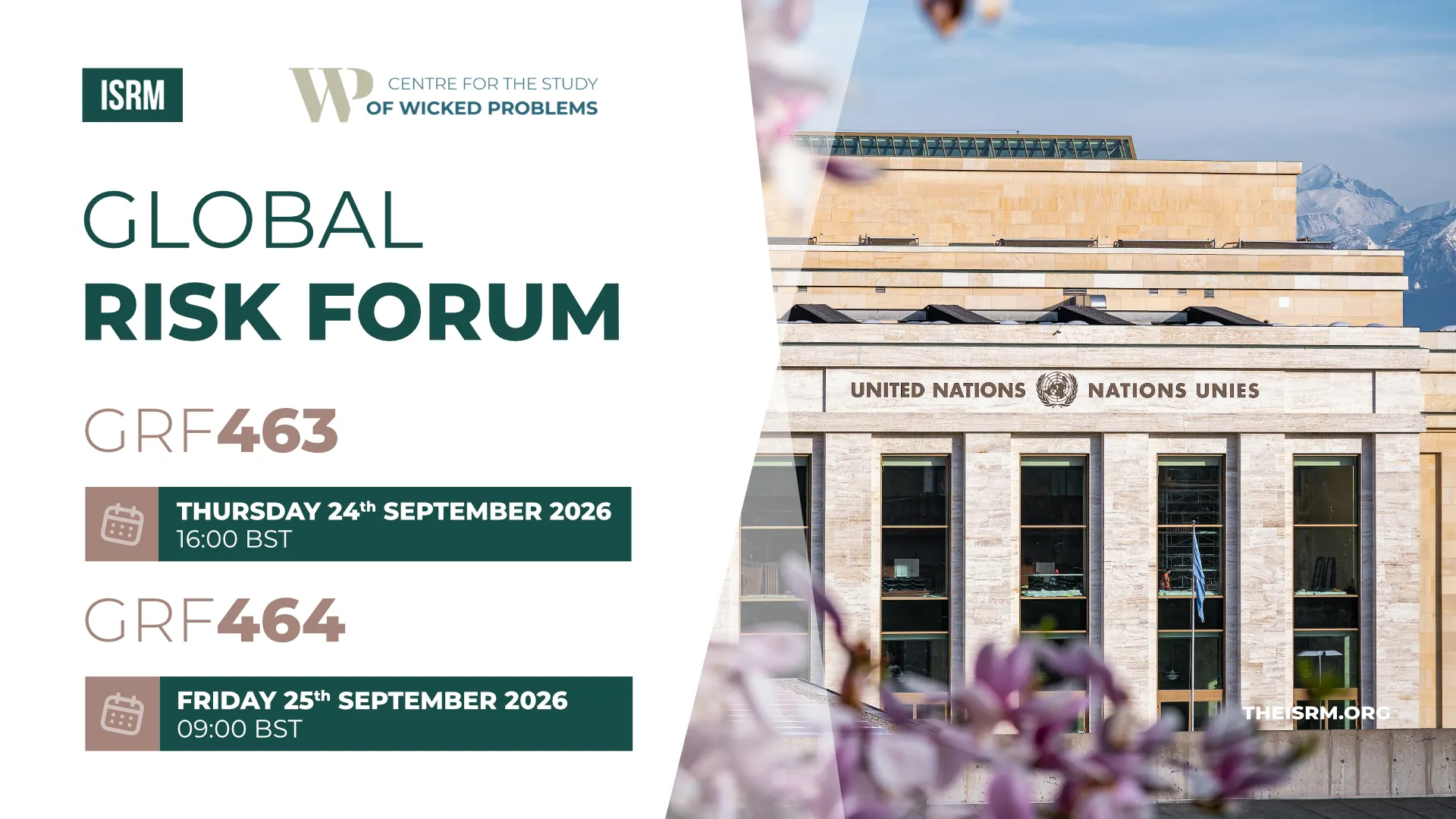
Tune in to this week’s GRF for a closer look at how these threads are converging – and what risk professionals should be watching for next.
- Global Risk Forum 463
- Thursday, 24th September at 16:00 BST
- REGISTRATION >>
- Global Risk Forum 464
- Friday, 25th September at 09:00 BST
- REGISTRATION >>
