More than 5,100 people have died in the largest recorded outbreak of Bundibugyo virus disease. Did it make your morning briefing?
On Monday in Geneva, the Director-General of the WHO (World Health Organization), Dr Tedros Adhanom Ghebreyesus, put the whole problem in one sentence: “A pathogen threat anywhere can become a threat everywhere – to the people of every country.”
He was urging governments to finish the WHO Pandemic Agreement. Here’s the catch. It was adopted in May 2025, but one of the hardest parts was left for later: the rules governing how pathogen samples, and the vaccines and other benefits developed from them, are shared fairly. This is known as PABS (Pathogen Access and Benefit-Sharing). Rich and poorer countries still disagree on how it should work.The negotiations are taking place in Geneva from 2–13 November.
So we installed the smoke alarm and forgot the battery.
And the fire is real. This particular Ebola strain, known as the Bundibugyo virus, has no licensed vaccine or specific treatment. Ituri province in the Democratic Republic of Congo (DRC) remains the epicentre, while imported cases have also been reported in Kenya and Nigeria. The European Centre for Disease Prevention and Control (ECDC) outbreak update provides the latest figures and geographical breakdown.
Now zoom out, because it isn’t only Ebola. A child has died of measles in New York, the state’s first measles-associated death in more than 30 years, according to the New York State Department of Health. In Sudan, strikes on power stations threaten hospitals that depend on scarce diesel for backup generators. Different countries, same weak spot: the infrastructure behind the headlines – sharing, power and trust.The Soufan Center’s latest briefing explores the wider security implications.
That’s why this week matters. World AMR (antimicrobial resistance) Awareness Week starts on 18 November. This year’s message is that the health of people, animals, plants and the environment is closely connected. This is the One Health approach, and outbreaks read it the same way. You can find out more about WHO’s One Health framework here.
A few questions to carry out of the room:
- If a new pathogen reached your city tomorrow, who would you call first?
- What within your organisation has been considered but not yet implemented?
- And which part of your resilience depends on someone else’s hospital, grid or goodwill?
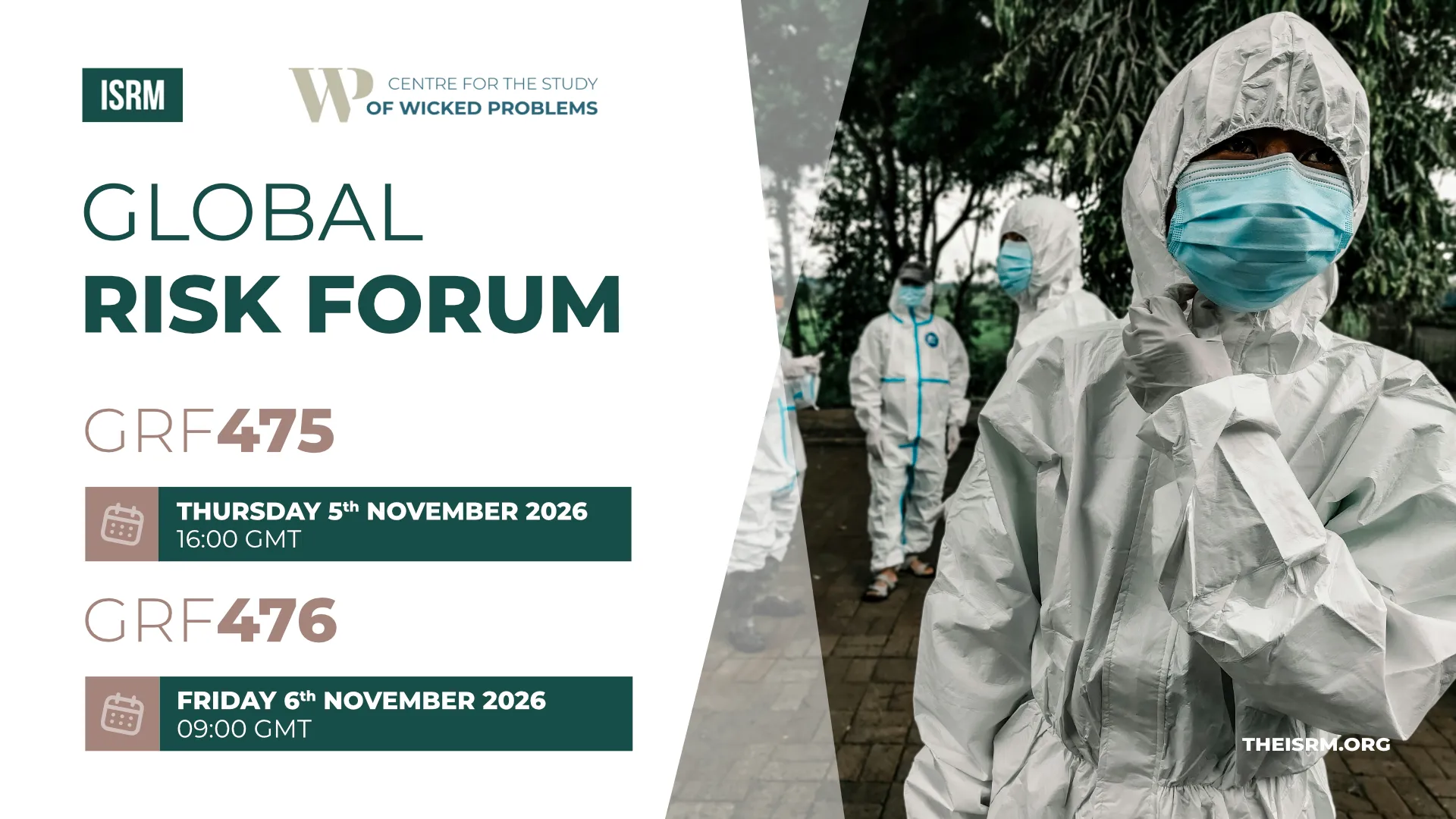
Join us at the Global Risk Forum this week and tell us whether your alarm is still missing its battery.
- Global Risk Forum 475
- Thursday, 5th November at 16:00 GMT
- REGISTRATION >>
- Global Risk Forum 476
- Friday, 6th November at 09:00 GMT
- REGISTRATION >>
