We’re continuing our global conversation, and this week’s developments again point to a world where risks rarely unfold in isolation anymore. More and more, they interact, overlap and end up reinforcing each other across systems and regions.
Although global focus is on the Straits of Hormuz and the impacts of the continued blockade by both US and Iran, south-east Asia continues to be a centre of on-going tension. The Taiwan Strait remains one of the most sensitive pressure points, but the Malacca Straits is unmentioned outside of the specialist discussion groups. That is the connector between China, Japan, Indonesia, Korea and other nations in the region, as well as between Asia, Middle East and Africa. It carries between 1/3 and 1/4 of the world trade, as well as providing the shipping routes for oil and LNG (liquid natural gas) into the region. But the real story isn’t just about escalation risk — it’s about dependency. Taiwan sits at the centre of global semiconductor production, so even relatively small shifts in tension can spread through supply chains, AI development and industrial capacity. What once could have been considered a regional security issue now has the potential to significantly disrupt global economic stability.
In Indonesia, where David is taking part in an ISRM Conference this week, the dynamic is different — less about hard numbers, more about confidence. Public confidence and support is increasingly shaped by how predictable and steady policy feels. When that confidence slips, it is easy for policies to become increasingly populist, which in turn leads to increased social pressures and potential undesirable consequences.
Humanitarian crises in Somalia and Haiti point to something more structural. These aren’t single breaking points, but long pressure systems where shocks arrive faster than recovery can keep up. The result is a kind of “stuck” reality, where crises don’t really resolve — they just keep shifting form.
Environmental disruption in Papua New Guinea and other places where the background environment is increasingly stressed,
follows a similar pattern. In places with fewer buffers, natural hazards don’t stay contained for long — they spill over into food security, livelihoods and multiple other issues that can then impact on everyday stability.
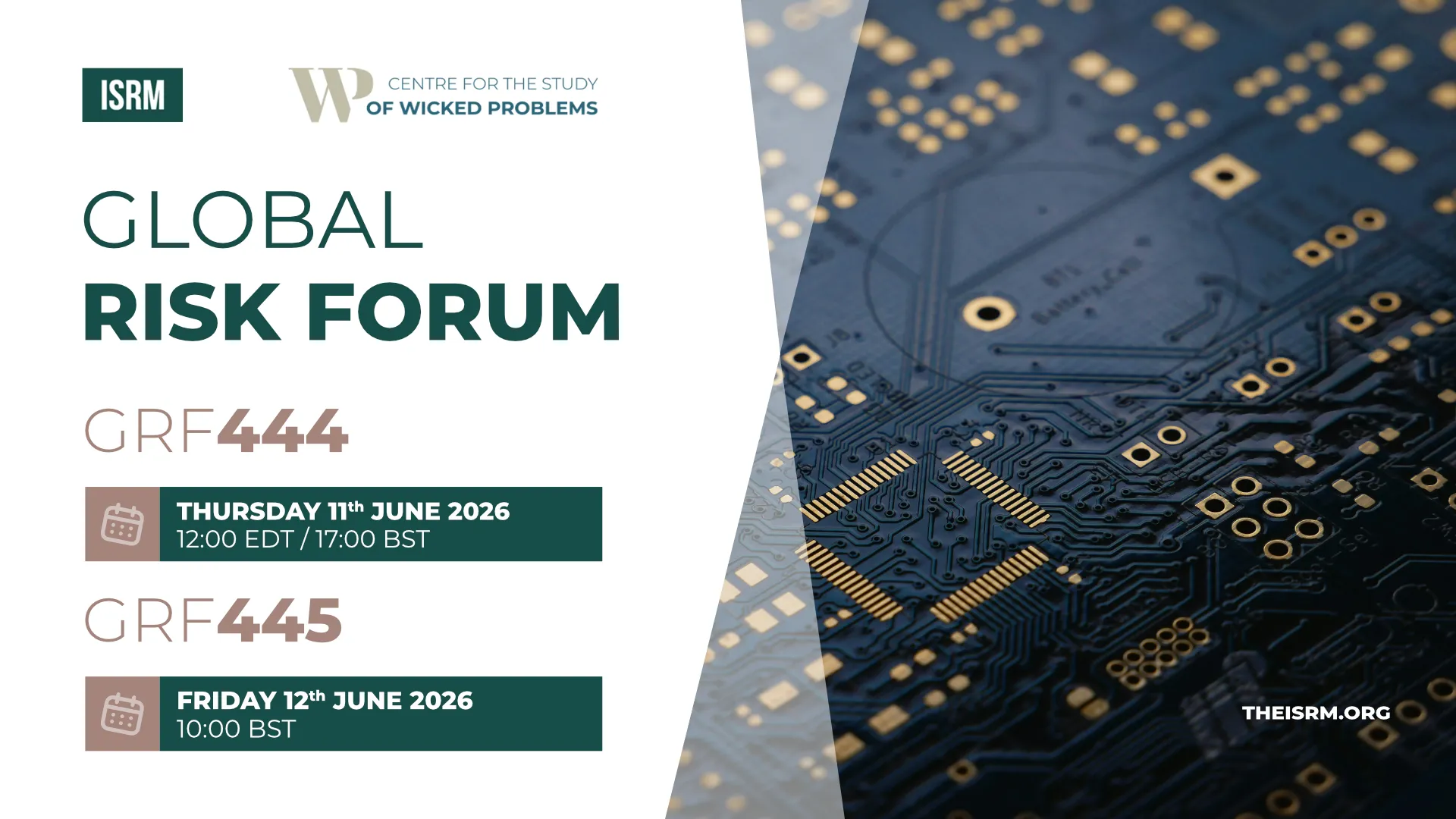
At Global Risk Forum 444 & 445 this week, we’ll step back from the headlines and look a little closer at what’s really driving these patterns. Alongside anything else on your radar, we’ll ask a simple question: are we still dealing with separate crises, or is this starting to blur into one interconnected system under pressure?
Join the conversation — and bring your perspective into the discussion.
- Global Risk Forum 444
- Thursday, 11th June at 17:00 BST / 12:00 EDT
- REGISTRATION >>
- Global Risk Forum 445
- Friday, 12th June at 10:00 BST
- REGISTRATION >>
