
Global Risk Forum 471 & 472
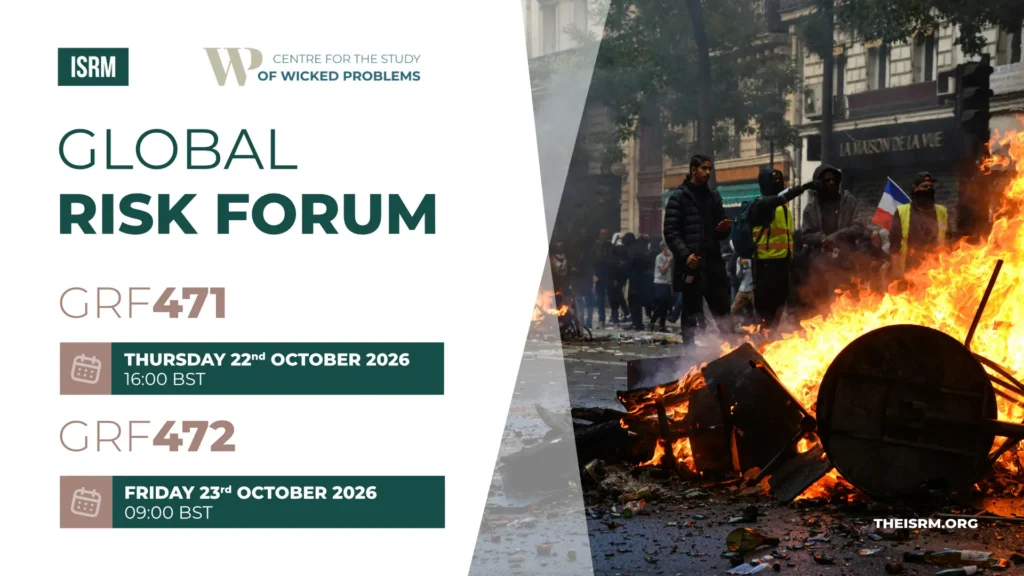
Bridges rarely collapse under the heaviest truck. They give way under the thousandth ordinary one. That thought kept coming back this week, starting in France. On Saturday, a month of student protests met with wider anger over the cost of living and deteriorating public services. More than half a million people took to the streets […]
Global Risk Forum 469 & 470
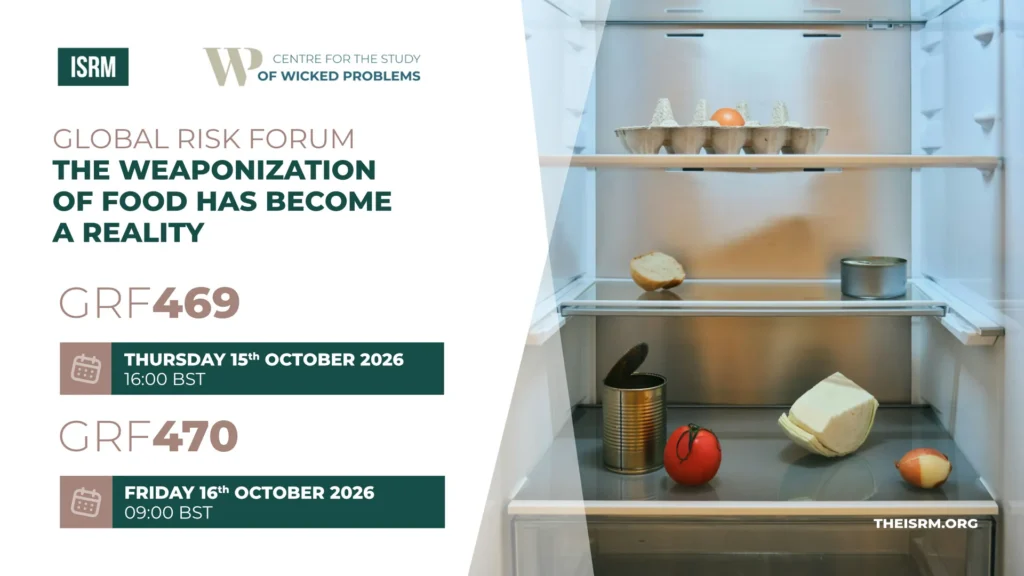
The weaponization of food has become a reality. Christophe Hansen, the EU’s Commissioner for Agriculture and Food, said those words this week after a cyberattack hit hundreds of French supermarkets. He warned of exactly that. Around 150 Intermarché stores were hit overnight. Attackers reached the cooling systems and set them to defrost, so fridges and […]
Global Risk Forum 467 & 468
“Oil and gas are not just tradable commodities. They are the lifeblood of modern civilisation.” Amin Nasser, CEO of Saudi Aramco, said those words this week while reflecting on the continuing disruption around the Strait of Hormuz. He described it as the most serious energy supply shock of his career. And when someone who has […]
Global Risk Forum 465 & 466
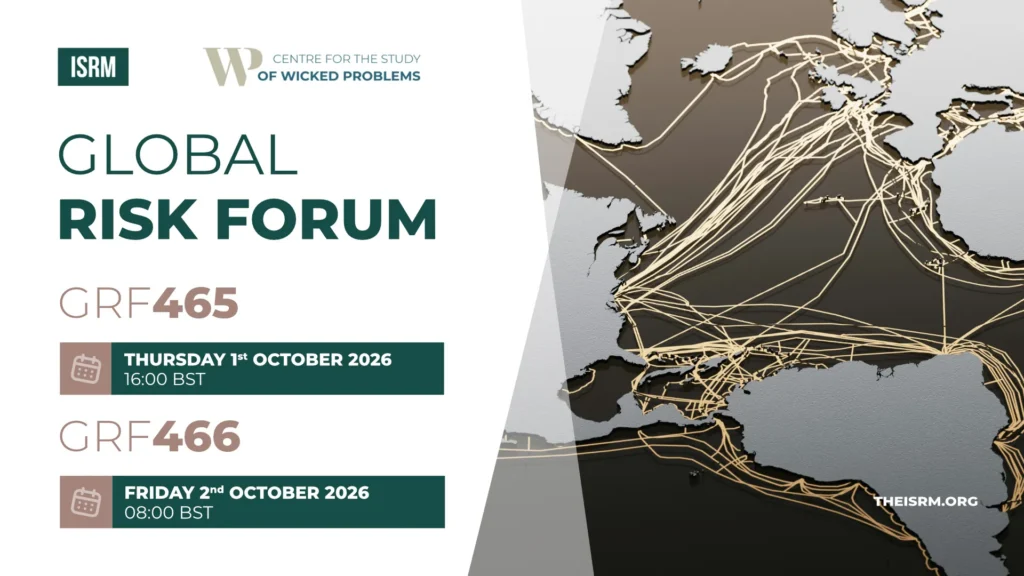
“The fault lines in our world are widening. Cracks have become canyons.” These words from UN Secretary-General António Guterres at last week’s General Assembly feel particularly relevant as we look at the events unfolding around the world. From conflict and critical minerals to extreme weather, shifting global alliances and forgotten humanitarian crises, the headlines may […]
Global Risk Forum 463 & 464
Shakespeare put it well: “When sorrows come, they come not single spies, but in battalions.” Four centuries later, the observation still holds – and this week in New York, it’s less a literary flourish than a literal agenda. The 81st UN General Assembly is bringing many of these pressures together, with 73 heads of state […]
Global Risk Forum 461 & 462
Autumn always arrives quietly, but the world rarely does. As the days shorten and the season turns, two stories in particular have been pulling at that quiet this week — one unfolding on the ground, one unfolding in the space between labs and podiums. Yemen’s Houthi rebels have just pulled off one of their biggest […]
Culture Risk: Blame, Silence and the Culture You Build Before the Crisis

by Scott Hayes M.ISRM My colleague Musaab Fagiri recently wrote about hearing the raw sound of a crisis unfolding through the lyrics of a rap track and asking a simple question, “What are you going to do when the shit hits the fan?”. But one paragraph from his article stuck with me: “By the time […]
Global Risk Forum 459 & 460
Some weeks seem to pass quietly. Others leave you with the feeling that something has shifted, even if you cannot quite put your finger on it. This was one of those weeks. Several situations that had been bubbling away for some time moved up a notch. Tensions in the Gulf intensified, Sudan’s humanitarian crisis took […]
Global Risk Forum 457 & 458

WE ARE BACK! The world has changed. The conversation has never been more important. We hope you’ve had a chance to slow down, recharge and spend some time with the people who matter to you over the summer, wherever you are in the world. August brought a series of significant events and developments across the […]
When Shit Hits the Fan: Presilience, Capability and the Illusion of Preparedness

by Musaab Fagiri Whenever I listen to Shit Hits the Fan by Obie Trice, featuring Dr. Dre and Eminem, I do enjoy the music, but I also hear a raw sound of a crisis unfolding, the messy reality of risk management and the core of the proactive resilience AKA Presilience. Too often, organizations treat risk […]