by Nick Turner M.ISRM
Public events are meant to feel open. Welcoming. Safe.
But over the past decade, that sense of safety has too often been built on assumption rather than engineering—and the consequences have been deadly.
Since 2010, vehicle ramming attacks at public gatherings across North America have killed 36 people and injured more than 228. Five major incidents. Five different cities. Five moments where a vehicle entered a crowd that had been told—implicitly—that it was protected.
It wasn’t.
What connects these tragedies isn’t ideology, geography, or chance. It’s something far more uncomfortable: absence of engineered hostile vehicle mitigation.
The Most Overlooked Threat In Plan Sight
A vehicle is one of the most effective weapons available to a malicious actor—not because it’s sophisticated, but because it isn’t. No special training. No illegal procurement.
No warning signs. Just a steering wheel, a gas pedal, and a crowd.
Yet event security planning has long treated vehicles as a compliance problem rather than a threat. We deploy cones, sawhorse barricades, plastic fencing, even police cruisers— measures designed to guide cooperative drivers, not stop hostile ones.
That distinction matters. A lot.
Traffic control is not vehicle mitigation. Crowd management is not impact resistance. And visual deterrence does not equal stopping power.
What Real Protection Actually Looks Like
Hostile vehicle mitigation (HVM) is not theoretical. It is an established discipline grounded in physics, engineering, and tested performance.
Proper HVM barriers are designed to absorb, redirect, or arrest the kinetic energy of a moving vehicle. They are tested against known vehicle weights and speeds under recognized standards such as ISO 22343 and ASTM crash ratings. They either stop a vehicle—or they don’t.
There is no middle ground.
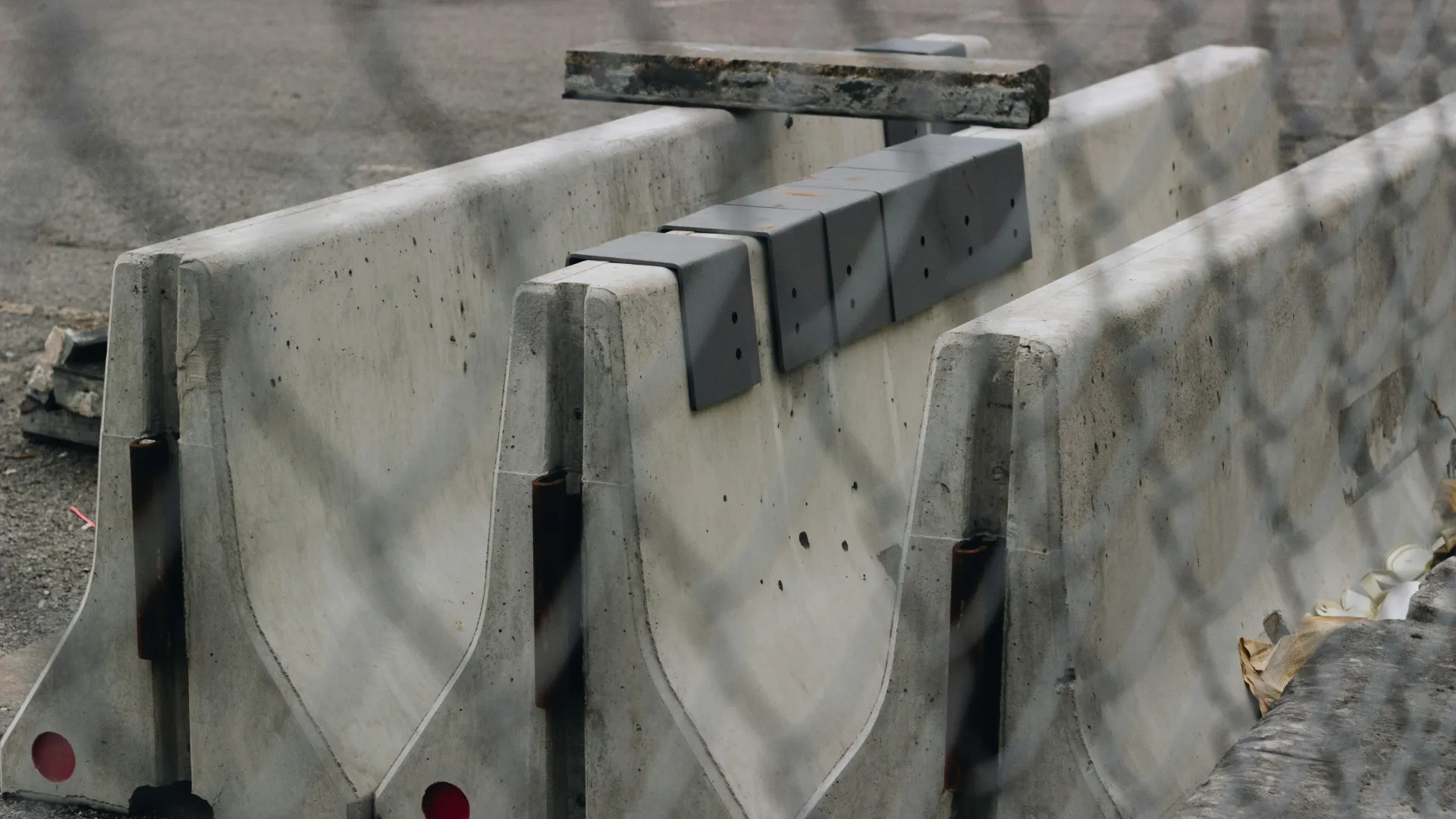
Permanent HVM systems—bollards, reinforced planters, hardened street furniture—are already protecting transit hubs, government buildings, and dense urban cores across North America. When properly designed and installed, they stop vehicles without turning cities into fortresses.
For events, festivals, and parades, certified mobile barriers provide the same stopping capability without excavation or permanent infrastructure. These systems exist. They deploy quickly. And they work. What’s missing is not technology. It’s prioritization.
The Planning Assumption That Keeps Failing
Nearly every catastrophic vehicle ramming incident shares a common planning flaw: assumed compliance.
The belief that drivers will respect closures.
That a cruiser parked sideways is enough.
That a uniformed presence alone will deter intent.
But hostile vehicle mitigation isn’t about the driver who makes a wrong turn. It’s about the one who doesn’t intend to turn at all.
Effective HVM planning asks uncomfortable but necessary questions:
- How fast can a vehicle reach this crowd?
- Where are the unprotected approach angles?
- What happens if one barrier fails?
- How do we protect people without blocking emergency access?
If those questions aren’t being asked, the plan is incomplete—no matter how many volunteers, cones, or radios are involved.
The Risk Is Not Hypothetical
Globally, vehicle ramming has become one of the most common low-complexity attack methods because it works. It produces immediate results with minimal effort.
North America is not immune. What has changed is awareness.
Municipalities are beginning to move beyond reactive security. Insurers are scrutinizing event protection more closely. Risk managers are asking whether mitigation is certified—or merely symbolic.
This shift isn’t about fear. It’s about responsibility.
Protection Doesn’t Have To Be Oppressive
One of the persistent myths around hostile vehicle mitigation is that it “militarizes” public space.
In reality, the best HVM is barely noticed.
Modern systems are designed to preserve accessibility, pedestrian flow, and visual openness. When integrated correctly, attendees don’t feel restricted—they feel normal. Safe without being reminded why.
That’s the standard we should be aiming for: security that does its job quietly.
The Real Cost Of Doing Nothing
Yes, hostile vehicle mitigation costs money. Certified barriers are an investment.
But the cost of not deploying them is counted in lives, not line items.
Thirty-six fatalities. Hundreds of injuries. Families permanently changed because a preventable vulnerability was left unaddressed.
Any event that concentrates people into pedestrian space now carries a responsibility to address hostile vehicle risk as a core planning requirement—not an optional upgrade.
The Question We Should Be Asking
The question is no longer, “Is this event likely to be attacked?”
That’s the wrong question.
The right one is simpler—and harder to ignore: “If someone tries to drive into this crowd, will we stop them?”
If the answer isn’t a confident yes, then hope has replaced planning. And hope is not a security strategy.
Public gatherings exist to celebrate community, culture, and shared experience. They deserve protection that is engineered, tested, and intentional— not assumed.
That is what the rise of hostile vehicle mitigation really represents: a long-overdue recognition that safety must be designed, not wished for.
How We Are Protecting Crowds
By working with event organizers to go beyond simply planning a road closure and instead applying practical experience to the design of comprehensive Hostile Vehicle Mitigation (HVM) layouts, it is possible to create safer environments where crowds can gather with confidence. This approach looks past cones and detour signs to consider vehicle approach angles, stopping distances, pedestrian flow, emergency access routes, and the unique risk profile of each venue. Through the careful placement of physical barriers, controlled access points, and clear traffic channelization, the likelihood of unauthorized vehicle entry can be significantly reduced while still maintaining smooth operations for residents, businesses, and first responders. The objective is not just to close a road, but to thoughtfully design a protective perimeter that prioritizes public safety without compromising the accessibility and spirit of the event.
